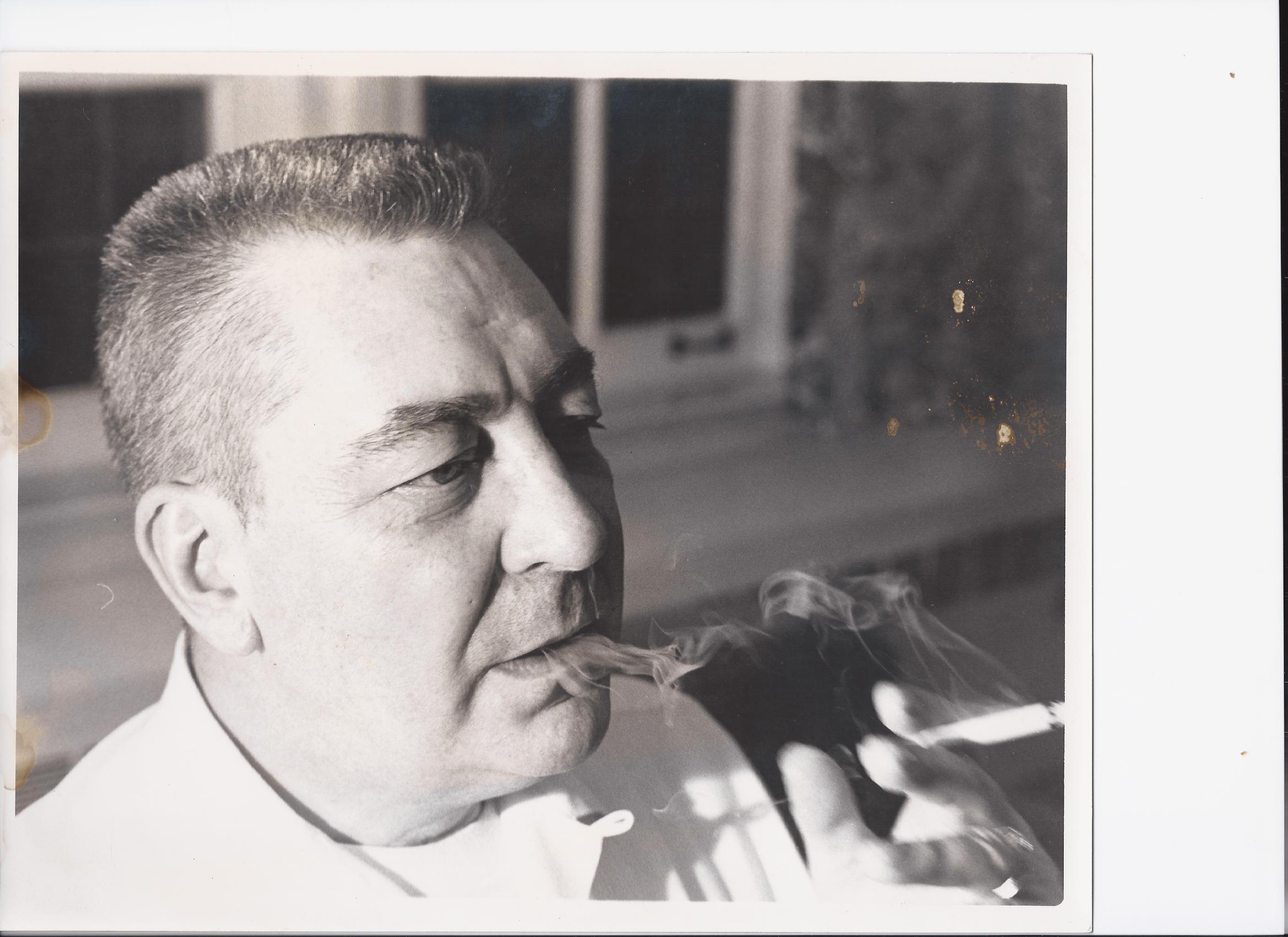
Stories of My Mother #9

bread

My mother brought every bit of her training and rigor as a scientist to bear on her duties as a mother and homemaker. In particular, she approached the task of preparing three meals a day for growing children with fervor and precision. Everything that was put in front of us, every meal, contained a meticulously constructed, well-rounded, visually pleasing combination of food and drink that also held an appropriate calorie content in a nutritionally perfect amalgam. The chewable vitamins that I was so fond of were entirely superfluous I’m sure. In fact, I was in such glowing good health, not to mention full of bouncy energy as a young child, my grandmother suggested to my mother that perhaps the vitamin pills were not such a good idea. She was the mean grandmother; my other grandmother tickled my feet all day long, if I wanted, and would never have said such a thing. Why it was only when my parents repeatedly questioned the endless bruises on her legs that she broke down confessed to my brother’s regularly kicking her. Nice grandmother.

Not that my mother wasn’t a big believer in The Treat – she was. We regularly went to the local bakery, and always had a well-stocked supply of beloved cookies in the house. We were allowed to have one, and only one, if we finished everything on our plates. I grew up in the time, and in the household, where this was a non-negotiable given. You ate what was put in front of you, and you ate it all. My mother maintained this policy with a complete zero tolerance stance, even though my brother would regularly throw up stuff he genuinely “didn’t care for,” in the parlance one used to describe that whole mess.

this-dairy-product

As early as I can remember, my mother said of her painstakingly-planned meals that we simply must eat it, because it was good for our Mr. Man. I have no idea where she came up with this, er, concept, but you just don’t question the things that you hear from your parents from day one. Mr. Man. Once my mother had made clear the extreme and immeasurable importance of Mr. Man, she was rather vague concerning follow-up details. I sort of understood that there was some… entity… inside of me that demanded satisfaction; after that, I was pretty much left to my own devices.

I was very young. I knew that our bodies are warm inside, way warmer than the air around us. I also had some idea that once we chewed up our food and swallowed it, it went somewhere deep down inside of us. It seemed natural and reasonable to me that there must be a fire deep in my belly, and that fire needed to be fed on an absolutely regular basis or it would go out. (We had a fireplace in my house, and once in a while my parents would let me feed pieces of paper into the dying embers, making a game out of waiting to see how long I could wait and still get the next piece of paper to ignite. Wait too long, and poof, done, out of luck, fire out.) Well, of course I didn’t think there was a nice suburban home fireplace inside my body. I thought it probably looked more like a brick oven.

And Mr. Man? Well, I watched a lot of cartoons. He looked pretty much like Wimpy from Popeye. Except without the suit – he wore a plain white t-shirt and working-man pants. After all, it was hot down there, and he had a ceaseless and essential job to do – you need to be comfortable for that.

wimpy

Stories of My Mother, #3

Georgia_O'Keeffe

Many years ago I worked with a Chicago theatre ensemble. As ensembles are wont to do, we made every effort to cast our play productions from within our own pool of ten or so actors. An enormous pool of talent existed there, no question; but some of the corp were definitely more versatile in their range than others. None was more versatile, even chameleon-like, than one of our actresses – Lindsay.

When she walked in off the street, with her white-blonde hair, pale blue eyes and inevitable cigarette, Lindsay possessed the demeanor of someone whose strong preference was to remain unnoticed. She offered her greeting, her authentic questions about my own health and well being; then took her seat and immediately seemed to recede, as if she were striving to become one with the chair that held her.

Lindsay could use this trait to amazing advantage on the stage, in roles where she could appear, no be, so worn, and weary, and shrivelled up into some deep phantom of a former self, that her 20-some years seemed completely impossible. On the other hand, Lindsay could walk onto the stage and take your breath completely away. She was radiant, stunning, utterly beautiful.

My mother had this – whatever this is – that comes from some well deep within, and is able convince anyone who looks upon you that you are, in every way, beautiful.

My mother never worked at being beautiful, and in fact, would have considered doing so a shocking waste of time and a bewilderingly superficial focus. She came of age in the late 1930’s and early 40’s, when the makeup regimen of a serious, athletic college girl consisted of dabbing a puff of compact powder on both sides of one’s nose – exactly twice – and applying a good coat of lipstick.

My mother took very little time to get ready each morning. A couple of fast brushes through her hair, dab dab on her nose, a quick and artfully drawn mouth, a glance at both sides of her face. But like Lindsay preparing for the stage, by the time she finished this simple routine, a beautiful woman stared back at her in the mirror.

e512db24939564e9efd5405f8bde5bec

GeorgiaAlfredStieglitz

okkefe

Photos of Georgia O’Keefe by Alfred Stieglitz

In memory of Lindsay

Stories of My Mother, #2

hero-winogrand


My mother thought of herself as a beautiful woman. I’m not sure how I knew this, but I was sure of it: she went through each day of her life with the confident certainty that her beauty was a given. She never spoke of this, and referred to it only once that I can remember. When I was a mid-range adolescent, maybe 14 or 15, and boys had begun to sniff and circle around our house, my mother said one day, out of the blue: “You definitely have the better body, but I believe that I have the prettier face.”

Even then, in my dewy youth, I thought: what a weird ass thing to say.

winogrand

winogrand_garry_253_1984

photos by Garry Winogrand, from his book “Women Are Beautiful”

Stories of My Mother

While I continue to mull the future of “Pushing the River” – whether I will put the novel aside, discard it, work on a new, different project alongside it, or attempt to power through a finished first draft — it strikes me as a worthy idea to write something in the meantime. What has been on my mind quite a lot lately is: my mother. Undoubtedly this is because my own two children lost their father in a horrifying bike accident this past August; and it has created rippling echoes of my own first parental loss, when my mother did not wake up one morning in July, nearly forty years ago. She was 56 years old, and I was 20.

Here, then, is the first “Stories of my Mother.”

OJohnson

My mother hailed from a long line of rail-thin, nasal-voiced, energetic women who were capable and prepared at the drop of a hat to whisk into the kitchen and whip up a corn pudding or a batch of date bars well into their 80’s and 90’s.

My mother’s own mother came from a family of five children – four sisters and one brother – Edna, Lula, Ralph, Nell and Honey. Ralph was apparently a gentle and quiet soul who faded away and died quite young, leaving the four sisters to march into old age and beyond in their own brisk company.

Edna was the eldest, the smallest, the most serious, and arguably the most capable of the batch. The death of her husband in the early years of the 20th century did not deter her from providing a loving home for their only son, while dipping her hand deep into the well of local politics and remaining involved in any number of civic organizations that endeavored to protect the excellent quality of life she found in Grove City, Pennsylvania. All the sisters had snow white hair from an early age, yet never seemed to change much after that. It could scarcely be believed when the day arrived, in her early 90’s, when Edna registered mild annoyance at her son when he asked her how to spell a distant cousin’s name – Becky – and she replied “B-E- eck – eck – Y.”

It was when my mother gardened that she most strongly exhibited her damn-the-torpedoes heritage.

I was born in the 1950’s to a physician father and a homemaker mother who had earned a PhD in Biochemistry. She worked as a chemist and physicist during World War II, helped write the first full assay of Vitamin C, then elected to stay home with her babies and never looked back. She committed to being a wife, mother, PTA member, churchgoer, bridge player, etc., with the square-jawed determination that I can only assume a woman would need in abundance to earn a PhD in a science in the late 1940’s.

Just as Donna Reed, June Cleaver, and their ilk would have you believe, women of this era lived their lives in dresses and skirts. In shirt-waist A-lines, or slim pencils, they cooked, cleaned, chauffeured, reprimanded, volunteered, and – if they were especially efficient and read the right ladies’ magazines – greeted their hard-working husbands at the door with a cheerful smile, a well-mixed cocktail, and the aroma of Big Meat wafting through the household.

suburbs-gardening-mowers-housework

Women wore trousers only if the situation deemed this indignity inescapable. If it was blazing hot, it was acceptable to wear “pedal pushers,” a trouser also sometimes called “clam diggers,” but relegated mostly to Californians, bicycle riders, and teenagers dying to adopt new and shocking trends. Once in a great while the temperature and humidity would soar well beyond the pedal pushers zone, and my mother would unearth her shorts for an afternoon of gardening.

pedalpushers

Despite the fact that skirts still hovered just below the knee back then, and pedal pushers hit at nearly the same latitude, shorts of the time were alarmingly, well, short. Though it happened two or three times each summer, I never felt prepared for the sight of my mother dressed head to toe in clothes that never saw the light of day otherwise – white Keds sneakers, thin nylon ankle socks folded down in precise cuffs, extraordinarily short shorts, and sleeveless button down blouses with impossible color combinations of checks and plaids.

I may as well come out and say it: the sight of my mother’s mile-long, stick-thin, never-seen-a-drop-of-sun, otherwise skirt-covered legs horrified me. I was humiliated and embarrassed and saddened well before the age that all daughters are horrified and embarrassed by their mothers. I immediately went about the business of planning an afternoon inside the house, safely behind closed black-out drapes.

shorts

My mother gathered up her armament of tools with the precision of a scientist who had tested munitions during World War II. She inserted her hands into her cracked, worn leather garden gloves with the care and confidence of a veteran surgeon. She approached an afternoon of gardening as her many generations of Naval officer family members undoubtedly approached their duty to protect their country. And though I could not bear to look at my mother’s frighteningly pale, spindly legs, I understood completely that when my mother returned to the house in the late afternoon – without a hair out of place or a drop of sweat on her brow – not a weed, nor a withered stalk, nor an unsightly rock would remain in the extensive garden borders. Not a one.

The Ocean of our Love


Early in the evening of August 26, 2014, my ex-husband Peter Bacon Hales died in a bike accident near his home in Stone Ridge, New York.  No words of my own could come as close to capturing the enormity of my family’s loss as those of our daughter Molly Hales.   Following is the eulogy she delivered at her father’s memorial service.


static.squarespace.com

When I was twelve or thirteen, my dad and I decided to make our own Christmas tree decorations. Somehow one of us got the idea that it would be nice to have a “natural” Christmas tree, decorated with pine cones and with strings of nuts and berries—that sort of thing. My dad bought bags of popcorn and mixed nuts still in their shells. But stringing them together turned out to be an unimaginably labor-intensive and frustrating task. The popcorn crumbled to pieces when we tried to put a needle through the kernels. And the nuts didn’t prove much easier to work with. If you’ve ever tried to just crack a walnut, you’ll realize the futility of attempting to poke tiny holes through those thick, tough shells. My dad ended up getting out one of his power tools, an electric drill—the kind you might use to drill through a solid wooden wall if you needed to hang a picture. And then he painstakingly drilled through each individual nut in that colossal bag, while I sat next to him on the couch and strung them together.

That was my dad. No task was too time-consuming, too monotonous, or just too “maddening” to be worth the effort, if it might bring a smile to the face of someone he loved. If it might bring a little more beauty to the world. Or if beauty proved elusive, then at least a shard of truth.

You see, my dad was an expert spinner of tall tales, willing to stretch the limits of believability in order to color a story as vividly as it seemed to live in his own memory. But for all that, he was a lover of truth as well. Not truth with a Capital T, not the Truth that Critical Theory dismantled, but the glimmers of truth that you recognize by the way they resonate inside of you, like a bell striking, its vibrations reaching all the way to your fingertips. I feel that now in my dad’s writing and in his photographs. They cut straight to the heart of the matter, showing you something that it feels, somehow, like you knew all along, but just couldn’t…quite…see. He certainly knew me as well as anyone ever has. But he also saw the best version of myself. I have tried to live up to the version of myself that I saw reflected in his love, and I know I will continue to do so, as we all will.

And that Christmas, with the homemade decorations? Well after all that drilling and threading, our string of nuts barely reached once around the Christmas tree. So my dad just hung it up vertically instead, weaving it back and forth along the front of the tree like a garland. And then he stepped back, admired the effect, and declared it a great success. As he looked at that bare Christmas tree with its one disheveled string of half-broken nuts, I could see that my dad’s face was lit with joy.

Of all the many things that I will miss about my father, this is the one that I will surely miss the most: his joy. His unbelievable capacity for joy. I have never met anyone who was so ready to be moved to tears by life’s small treasures. Who could feel such wonder at the things that the rest of us learn to see as mundane. The early evening sun reflected off of the trees behind the hayfield. The flash of a cardinal’s wings, red against the snow. The lip-smacking pleasure of a dirty martini. The feel of grass under his feet as he walked, barefoot, to the barn.

When I was 18 and struggling through a difficult period, my dad wrote to me. He said: I hope that in the midst of all of this, you are borne up by the ocean of love on which you float. And I was, even then. My dad had a knack for knowing what to say, especially when life seemed bleak. Especially when you weren’t quite sure if you had the strength to keep going, or if you even wanted to try.

So I will end with this wish for you all, from my dad.

I hope that you are swimming in the ocean of my father’s love, and that it buoys you up. Even now, even when it is his death that is dragging you down.

And dad, I hope that you are feeling the ocean of our love. I hope that you are floating on it.

-Molly Hales

“They Died at Home,” part 3, from “Pushing the River” #MondayBlogs

tumblr_m9pcj8TJpB1r48hglo1_1280

The blazing azalea bush was in full bloom, and my Lady was still being carried around inside when her mama and daddy bought their house. She knowed this from a photograph of the two of them standing in front of the azalea that spring, and another one of just her mama the very next spring holding a wild-haired infant of a few months when the bush broke out again.

And the boy was growing and kicking inside of my Lady while she and the Husband trudged around looking at place after place. They done their level best to look past the scraps of other people’s lives and to gaze ahead, trying to picture if the mortar and brick that stood around them could ever be a true home. It was early days for them, and the Husband could tell when his pregnant wife was working hard to recall the stoic spirit of her own mama, setting her chin against the desolation rising up behind her eyes. He reached for her hand, and he kissed it. “We’ll find it, baby. We will.”

She growed up thinking that this was the way the world was meant to be. You growed up and you found a worthy partner and you started a family and you made a home to raise them in. And you stayed. You weathered whatever came along, and you stayed. You kept right on staying until the moment of your very last breath on Earth, and you did it in the place where you’d lived.

Perfect_Family

“They Died at Home,” part 2, from “Pushing the River” #MondayBlogs

jbm

He shook at her toe a few more times, then went over and sat down upon his own side of the bed. It occurred to him that maybe if he got back under the covers and shut his eyes for a time, then opened them up again, it might all be different.

Instead he picked up the phone. “Bob,” he said. “Bob, I think Mary’s dead. I’m not sure, but I think that maybe she is,” which was an especially sad and strange thing to say considering that he was a doctor, and he knowed right down into his bones that she had breathed her last.

Five years later, he was a shadow of his former self, which ain’t saying much. He spent most of that five years setting in one chair, at a table in his dining room. From that chair, he sorted through his piles of mail, and leafed through his magazines, and sipped at his bowls of lukewarm broth, and watched whatever happened to be on the television. He drank a goodly amount, and he smoked so much that the walls of the house – which had been painted a cheery eggshell white under Mary’s watch – looked for all the world like the entire major league had been spitting tobacco juice at them for the five years since she passed. He ate nothing but canned soup. Chicken noodle, or cream of mushroom, and he drank his whiskey straight, in big tumbler glasses they had gotten as a wedding present with his initials etched in a diamond pattern. The callous on his thumb was substantial from running it across the letter “M,” over and over, the one initial they had in common.

His hands shook bad, his lungs and liver was both shot to hell, he could hardly feel the ground underneath his own feet cause he no longer had the sense of them being attached to his legs. But worst of all for him, his eyesight was near gone, so he couldn’t see to read his beloved newspaper no more. He drank his full pot of coffee and smoked a great many cigarettes each morning while squinting at it, holding it close to one eye first, and then the other; but the news running on the television was giving him all the information he got, really.

My lady was setting there at that table with him, reading him from the newspaper about how them 1,000 miners way off in Poland was barricaded in the a mine in the Silesian coal district, cause they was the last folks still resisting martial law over there. A couple of the boys had been killed, like usual with such goings on, and my Lady was just getting to the details when her daddy placed his cigarette carefully in the ashtray, got a real surprised look on his face, and slid right on off of his chair and onto the floor. He, too, had died at home.


photo of  John B. Monier by Barbara Monier

“Coffee” part 2

44308017

No one could ever figure out whether it was one specific thing, or a compounding of smaller things that tipped the scales for the old coffee pot. Every so often, the scoundrel would simply refuse to allow the brewed coffee to flow smoothly into the carafe below, but would erupt like a volcano, spewing a scalding muck of boiling water and coffee grounds across the entire kitchen counter, sending rivulets down the cabinet doors and dark streams across the floor.

It had happened to everyone in the family at one time or another, and each of the family members had their own unique response: it happened to Madeline only once. When it happened to the Little One, she practiced putting the various parts and pieces together over and over and over, until she was certain that she had mastered it. But once satisfied that mastery had been achieved, she promptly forgot every step of the procedure and needed a refresher course each time she started anew. The Boy managed to be someplace else, nearly always, when a pot of coffee needed to be made — he so relished the cared-for feeling that came from someone placing a freshly-made, wonderfully warm, aromatic cup in his hand. On the other hand, if elected, he held no rancor nor possessed any fear about the crusty old pot; he approached it with an even, calm attitude, expecting that everything would turn out just fine. And it did.

coffee-good-evil-someecards

Marie gave it a very wide berth. She snarled at it, scowled in its direction when she went about the business of her cooking. Truth be told, she preferred to not even pour herself a cup from a fully-finished batch, so convinced was she that the diabolical device could not be trusted under any circumstances whatsoever and was, in fact, capable of genuine Evil.

Marie’s distaste of the wicked pot was so great that she did not budge from her treetop, arty nest until she heard Madeline’s feet hit the floor of her bedroom below at approximately 6:58. Even then, Marie did not move a muscle until a safe period of time had passed, and she could descend the stairs with certainty that the morning’s fresh pot of coffee awaited. Which she generally did not drink, although she usually agreed to have Madeline pour her a cup, noting the obvious pleasure it gave her mother-in-law; but Madeline would later find the stone-cold, untouched mug squirreled away in a corner of the kitchen.

mQThT

After years of managing the opening shift in coffee joints, Marie had long ago lost the ability to sleep in. She awakened each day sometime between four a.m. and five, and having her life spread out before her in one large room enabled her to accomplish a great deal in the hours before Madeline opened her eyes to the new day. By the time “good morning’s” passed from each of them to the other, Marie had: read passages from a variety of books that recent events brought to mind; corresponded, both on paper and via email, with people across the world who had stirred her soul into a permanent, unmovable, ferocious loyalty; written in her journal; scanned vintage anatomical drawings; continued the eternal process of organizing her thousands and thousands of photographs taken from world travels; jotted down ideas for a new children’s book she was writing; and curled up in the corner of the room so she could manage a long, impassioned, whispered conversation with her husband in a voice so hushed that Madeline would not even have the barest murmur invade her dreams.

breaking-bad-coffee


“A Girl Moves,” excerpt from the novel “Pushing the River”

moving-house

The call came from Marie one morning: “I need your help,” she said.  “I have no memory of how to do this. I have no idea how people move from one place to another.”

The decision that had begun with a gentle hand against a baby elephant’s trunk in far-off Asia had been made. John would remain in Boston to finish school, and Marie would return to Chicago. She would move into the top two rooms on the uppermost floor of Madeline’s house, and she would await the gathering storm.

Billie Rae, Marie’s mother, and Sienna, her baby sister, made it abundantly clear that this was thoroughly unnecessary, confounding, and furthermore, insulting. They steadfastly maintained that they had full control of the situation at hand.

Unwanted in the new life ahead, and leaving her old life behind, she would await the gathering storm.

Lonely_Highway
Madeline knew the low rumble of the U-Haul when it pulled up in front of the house, though her back was turned to the windows facing the street. She considered how many times she had helped her children move in, or out, since each of them had first left home. She was pretty sure the number was somewhere around 623 times, or so it certainly seemed to her. Still, she rued that her advancing years allowed her to do less and less; her legs now wobbled by the third flight of stairs, and she needed to put boxes down to rest for a moment all too often.

It had been decided that Marie would bring the majority of her and John’s possessions back with her, leaving him with a skeletal assortment of bare necessities as he focused on the grueling home stretch of his school. Still, Madeline was quite taken aback when Marie swung the U-Haul cargo doors open to reveal a van that was crammed completely full, every possible square inch consumed in what amounted to a breathtaking feat of engineering.

Reading Madeline’s thoughts on her face, Marie remarked, “Yeah. We had to pack it and re-pack it a few times.”

Marie had also brought their dog. Everyone had marveled since the first day Marie chose the impossibly tiny sleek brown puppy that she had managed to find the exact canine equivalent of herself, for Proust was relentlessly demanding, deeply affectionate, possessed of strong and generally instantly-formed impressions of all people and things in his path, somewhat unpredictable, and generally in-your-face with his intense and abiding love.

moving_box_with_dog.305165606_std

“Billie,” new excerpt from the novel “Pushing the River”

portrait-of-a-young-woman-draw-by-tiziano-vecellio-titian

Madeline rolled Marie’s words over in her mind,  “She’s not safe.”  She flashed back to two years ago, the last time she had seen Sierra.  That summer.

“Not safe.”  Madeline heard about the events of that night after it was all over.  She awakened to then-13-year-old Sierra curled up in a ball, deep in slumber on the couch in the very room where Marie told the story of the previous night as if it were a tale of very long ago, and quite far away.  Grotesque scenes involving the screaming of sirens, spewed vitriol, handcuffs, jail, emergency protective orders, and a young girl – with a freshly stitched and gauze-wrapped gash across her forearm – now in the legal custody of Marie, with the legal residence of Madeline’s home.  Marie blew across the top of her coffee as she spoke.  She unfurled a crumple of pages — various reports from police, the hospital emergency room, child services — and smoothed them with her hands.

Henri-Lebasque-Young-Woman-Seated-Impressionism-Paintings-Artwork-37

“Not safe,” Marie now said, two years later, into the phone.

Madeline thought of a photo that Marie had pinned to the wall of the room that she and John lived in that summer of two years past.  An old photo of her mother Billie Rae when she was young — a grown woman, but still young.  She was seated at a kitchen table, leaning forward in her chair to nestle herself, her slight-framed body, fully against the table.  One shoulder tilted towards the camera in a way that looked both flirtatiously coy and thoroughly exhausted.  The photo was not a close up, and the distance made Billie seem even tinier, all long dishwater blonde hair and huge blue eyes.  There was something else, too – a softness.  The girl in the picture possessed a definite softness.  This is what Madeline would try to remember.  That there had been a time when Billie was soft.  Vulnerable.  Young.  There was strength in that face.  And fatigue.  And pleading.  Whatever came next, and next after that, Madeline would try to remember the girl/woman in that picture.

chiquitapiconera-pintores y pinturas-blog-de-juan-carlos-boveri

Paintings, top to bottom, by:

Tiziano Vecellio Titian, Henri Lebasque, Julio Romero de Torres