Those of you loyal and intrepid souls who have followed my blog posts of “Pushing the River” – my third novel-in-progress — well, undoubtedly you have noticed the rather vast silence of the past couple months.
It was nearly two years ago when I was enjoying a glass of wine with my friend Mary, regaling her with the latest tales of my extended family and trying to make some sense of it all. The number of people residing in my home kept growing, and with it an increasing quiet chaos and sense of foreboding, inescapable doom. Between sips (or perhaps gulps, by that point) of wine, I told Mary that I was seriously considering beginning a third novel sparked by the events taking place in my house. Without missing a beat she said, “Ha! And it should be told from the point of view of the house itself!”
Viola. Inspiration. As it usually occurs – as a completely unexpected bolt from the blue in the form of an idea I could steal outright from someone else and make my own.
Life has thrown some pretty good punches since I began work on “Pushing the River” – just as life is wont to do. I have a decent one hundred or so pages, much of which I am reasonably pleased to re-read and know the words are mine. But the strangest thing has happened. I seem to have lost interest. In all of it! Even stranger – my friend and fellow writer Rita apparently saw this coming, and told me this recently over a shared glass of wine.* (*Obviously, there is a critical causation at work here; I must heed it and continue to drink wine regularly with good friends.) Rita (correctly) had the belief that this book, as I originally explained its conception to her, would need to be written quickly, almost breathlessly, to pour out a first draft while the fire of the original idea was hot within me. In some sort of shaman-like wisdom, Rita foresaw that if I couldn’t churn it out fast, the combination of me and the idea would lose momentum.
Even those of us who plot scrupulously, maintain note cards with excruciating details of our principal characters’ habits, gestures, obsessions, or plan a careful arc of increasing dramatic tension, climax, denouement – even we (ok, they) get surprised.
The idea for this chapter struck me — in one of those rare and delightful moments – as a bolt from the blue. It came from nowhere. When I was in the shower. An idea that had never occurred to me before blazed through my mind, and I understood immediately how well it fit into the novel-in-progress, how economically it conveyed an ever-increasing complexity of feelings and tensions inside the main character.
Originally, I had the idea that this chapter would be considerably longer than it currently is. I conceived of it going into lots more detail about the sex itself, and what went on in the character’s mind before/during/after that sex. The following version was written as a sort of schematic, almost like an outline that I intended to keep filling in. But, surprise! The schematic turned out to be everything that was needed. I think.
By the second week of December, my Lady felt as if she had fast-forwarded through a twenty-year marriage in just slightly more than three months.
Dan continued to spend long, lazy days in the kitchen, carrying on animated conversations with himself while he fussed over his bean concoctions. This charmed her immensely in September; by mid-December the noisy stream of words made her seriously question his sanity as well as provoking the hairs on the back of her neck to stand at full attention.
The ticket had been purchased – the ticket for the airplane that would whisk him away to tropical paradise for all of the brutal winter that lay ahead. January 4th. He would be gone, poof. Madeline teetered precariously on the brink of wondering how she could possibly tolerate three more weeks of his off-key humming, his utter failure to get her jokes, his flossing ritual. When he shuffled off to the bathroom each night to brush and floss, knowing the absurd amount of time that he would be gone set her own teeth on edge to such a degree she felt certain her back molars would shatter into bits.
In the evenings, the two of them would sit together on the sofa. Sierra and the baby dozed together in the Boy’s old bed upstairs. Marie worked one of her two jobs, or ran hither and yon trying her best to manage her own and several others’ lives. Dan invariably began his kneading of Madeline’s thigh, or his massaging of each individual finger – a perpetual motion machine of continual buzzy movement. The sadistic mosquito who senses when you are just about to drift off, and whispers in your ear. “For crying out loud,” Madeline thought to herself. “No wonder this guy meditates. This is a man who hasn’t known one moment of stillness in his entire life.”
She set her jaw against his very existence, calculating how she would bear the number of minutes until she could suggest that they call it a day, go upstairs for the night. At least the flossing ritual would offer her peace. And then, the solace of a lonely sleep, with Dan’s inhumanly perfect profile on the pillow beside her.
Madeline sighed. She rested her hand on Dan’s thigh for a second – a friendly gesture – and told him she was heading upstairs. “Be right up,” Dan said, without turning his head from the TV. “I want to catch a bit more of this, if you don’t mind.”
Madeline was out of the room when she said, over her shoulder, “not a bit.”
When Dan entered the bedroom, she was idly leafing through a magazine. In a different mood, she would have endorsed this particular journalistic effort as a “guilty pleasure,” a concept and a reality which she wholeheartedly supported. Tonight, leaning against the tower of pillows on her bed, she despised its banality, its endlessly recycled topics meant to appeal to the dark recesses of shame and anxiety amalgamated into the creature known as the American Woman. Which meant, of course, that she hated herself for reading it. For falling prey to its sunny, adjective-laden, exclamation-point-heavy!!!, bold and stylized font loaded B U L L S H I T about how to eat, dress, exercise, cut, coif, bleach, dye, tweeze, think, and talk as one’s best possible self, including, needless to say, fucking like a goddess.
“Are you in for the night?” Dan asked her.
“Yup.” She pretended intense concentration on her hated rag.
Dan switched off the overhead light, and began to undress. He undid his pants, which were baggy enough that they dropped immediately to the floor. Madeline unconsciously looked up at the sound of their thunk against the wood. She was confronted with the silhouette of his body, naked now from the waist down. Somehow the fact that Dan did not wear underwear – ever – still gave her a thrill, like an exquisite finger had touched a spot deep inside her belly. “God fucking damn it,” she thought to herself.
Dan crossed his arms, grabbed the sides of his shirt and pulled it over his head, rocking his hips first forward – just slightly — and back again along with the movement of the shirt as it climbed his abdomen, his chest, and down his arms to the reaches of his fingertips. He gathered his clothes from the floor, and stood in the dim light of the room with such an utter lack of self consciousness or guile that the ridiculous word “swoon” actually flashed across Madeline’s mind.
As if pulled by some string attached to that inner finger, Madeline’s foot inched up towards her other knee and fell to the side, leaving her legs open, wide, facing toward Dan.
Sometimes it is a smell, the particular angle of the sun’s light, the sound of a door closing – some thing that makes its way through the store of our life’s memories and touches something deep, far, previously lost. In this case, it was the movement, the precise position of her legs.
It was years before. Her still-husband Dick had come – had made an appointment to come — to the house while the children were at school in order to gather some of his things. She had not known exactly what to do with herself, and had gone into the bedroom to escape, to stay out of the way of this stranger she had married to for more than 20 years.
He came into the bedroom. He asked some question or other.
She had no idea what it was. The slight stoop of his shoulders she had not noticed before. The fact that he wore his glasses all the time these days. The awkward boyish uncertainty that made him speak just a bit too loud. The words were out of her mouth without her own knowledge, it seemed.
“Dick. Let’s make love.” And when thought re-entered her head, she added, “Please.”
Her leg had moved up, her knees had fallen open, into that exact position as the words escaped her mouth.
Dick sighed. “I can’t.” He shook his head and looked at the floor. “I just can’t.”
“Twenty-one years, Dick. Twenty. One. Years. I have no idea, no memory, of the last time we made love. It seems like this is something I should have. We should have.”
He sighed again, shook his head again, looked suddenly much smaller, much older.
“You mean because of her.”
Dick said nothing.
“That’s what you mean, isn’t it. You mean because of her you will not make love with me. With your wife.”
“I don’t want you to think for a second that our marriage unraveled because of her. I can’t have you think that.”
“That’s an interesting choice of words. You can’t have me think that.”
“Madeline, for god’s sake.”
“It doesn’t seem like an unreasonable thing to ask. To know it will be the last time. To have a memory of it.” She added, “ We are still married, you know. Meaning that you’re already a cheater. Meaning that if you’re trying to avoid thinking of yourself as a cheater, well, too late.”
Dick walked out of the room and left the house.
Madeline remained on the bed, in the position with her legs open, for a long time.
No.
That’s not what happened.
That was what a large part of Madeline had wanted to happen. Part of her still wanted to believe that the man she had spent the past twenty-some years with was somehow an honorable man, a man who had strayed into a new love, and who had declared his undying loyalty to it, in the same way that he once had to her.
The truth was this. The minute her knee dropped, her legs parted, she called out her still-husband’s name, “Dick,” — who had come in to ask one question or another –he took one step closer to the bed. And then he took another.
She remembered the tentativeness of their first touches. The awkward reaching of their tongues, venturing for the first time in a long while inside the surface of one another. Her head awhirl in a cacophony of recalled experience, a blur of lightning-quick images. The two of them making love. Fucking. Doing both at once.
“Dan,” she said. “Come here.”
She ran her fingers lightly along the underside of his penis from the base to the tip and back.
He leaned his head back and said, “Ah, Madeline. Your touch.”
No.
That’s not what happened.
She and Dick did not make love. She would never know, would have no memory, of the last time. A tear ran down her cheek into the pillow. She wiped it away to the sound of Dan’s gentle snore.
art, top to bottom: Goya. Henri de Toulouse-Lautrec, Bela Czobel
“Dick. Let’s make love.” And when thought re-entered her head, she added, “Please.”
Her leg had moved up, her knees had fallen open, into that exact position as the words escaped her mouth.
Dick sighed. “I can’t.” He shook his head and looked at the floor. “I just can’t.”
“Twenty-one years, Dick. Twenty. One. Years. I have no idea, no memory, of the last time we made love. It seems like this is something I should have. We should have.”
He sighed again, shook his head again, looked suddenly much smaller, much older.
“You mean because of her.”
Dick said nothing.
“That’s what you mean, isn’t it. You mean because of her you will not make love with me. With your wife.”
“I don’t want you to think for a second that our marriage unraveled because of her. I can’t have you think that.”
“That’s an interesting choice of words. You can’t have me think that.”
“Madeline, for god’s sake.”
“It doesn’t seem like an unreasonable thing to ask. To know it will be the last time. To have a memory of it.” She added, “We are still married, you know. Meaning that you’re already a cheater. Meaning that if you’re trying to avoid thinking of yourself as a cheater, well, too late.”
Dick walked out of the room and left the house.
Madeline remained on the bed, in the position with her legs open, for a long time.
No.
That’s not what happened.
That was what a large part of Madeline had wanted to happen. Part of her still wanted to believe that the man she had spent the past twenty-some years with was somehow an honorable man, a man who had strayed into a new love, and who had declared his undying loyalty to it, in the same way that he once had to her.
The truth was this. The minute her knee dropped, her legs parted, she called out her still-husband’s name, “Dick,” — who had come in to ask one question or another — he took one step closer to the bed. And then he took another.
By the second week of December, my Lady felt as if she had fast-forwarded through a twenty-year marriage in just slightly more than three months.
She set her jaw against his very existence, calculating how she would bear the number of minutes until she could suggest that they call it a day, go upstairs for the night. At least the flossing ritual would offer her peace. And then, the solace of a lonely sleep, with Dan’s inhumanly perfect profile on the pillow beside her.
Madeline sighed. She rested her hand on Dan’s thigh for a second – a friendly gesture – and told him she was heading upstairs. “Be right up,” Dan said, without turning his head from the TV. “I want to catch a bit more of this, if you don’t mind.”
Madeline was out of the room when she said, over her shoulder, “not a bit.”
When Dan entered the bedroom, she was idly leafing through a magazine. In a different mood, she would have endorsed this particular journalistic effort as a “guilty pleasure,” a concept and a reality which she wholeheartedly supported. Tonight, leaning against the tower of pillows on her bed, she despised its banality, its endlessly recycled topics meant to appeal to the dark recesses of shame and anxiety amalgamated into the creature known as the American Woman. Which meant, of course, that she hated herself for reading it. For falling prey to its sunny, adjective-laden, exclamation-point-heavy!!!, bold and stylized font loaded B U L L S H I T about how to eat, dress, exercise, cut, coif, bleach, dye, tweeze, think, and talk as one’s best possible self, including, needless to say, fucking like a goddess.
“Are you in for the night?” Dan asked her.
“Yup.” She pretended intense concentration on her hated rag.
Dan switched off the overhead light, and began to undress. He undid his pants, which were baggy enough that they dropped immediately to the floor. Madeline unconsciously looked up at the sound of their thunk against the wood. She was confronted with the silhouette of his body, naked now from the waist down. Somehow the fact that Dan did not wear underwear – ever – still gave her a thrill, like an exquisite finger had touched a spot deep inside her belly. “God fucking damn it,” she thought to herself.
Dan crossed his arms, grabbed the sides of his shirt and pulled it over his head, rocking his hips first forward – just slightly — and back again along with the movement of the shirt as it climbed his abdomen, his chest, and down his arms to the reaches of his fingertips. He gathered his clothes from the floor, and stood in the dim light of the room with such an utter lack of self consciousness or guile that the ridiculous word “swoon” actually flashed across Madeline’s mind.
As if pulled by some string attached to that inner finger, Madeline’s foot inched up towards her other knee and fell to the side, leaving her legs open, wide, facing toward Dan.
Sometimes it is a smell, the particular angle of the sun’s light, the sound of a door closing – some thing that makes its way through the store of our life’s memories and touches something deep, far, previously lost. In this case, it was the movement, the precise position of her legs.
It was years before. Her still-husband Dick had come – had made an appointment to come — to the house while the children were at school in order to gather some of his things. She had not known exactly what to do with herself, and had gone into the bedroom to escape, to stay out of the way of this stranger she had married to for more than 20 years.
He came into the bedroom. He asked some question or other.
She had no idea what it was. The slight stoop of his shoulders she had not noticed before. The fact that he wore his glasses all the time these days. The awkward boyish uncertainty that made him speak just a bit too loud. The words were out of her mouth without her own knowledge, it seemed.
“Dick. Let’s make love.” And when thought re-entered her head, she added, “Please.”
Early in the evening of August 26, 2014, my ex-husband Peter Bacon Hales died in a bike accident near his home in Stone Ridge, New York. No words of my own could come as close to capturing the enormity of my family’s loss as those of our daughter Molly Hales. Following is the eulogy she delivered at her father’s memorial service.
When I was twelve or thirteen, my dad and I decided to make our own Christmas tree decorations. Somehow one of us got the idea that it would be nice to have a “natural” Christmas tree, decorated with pine cones and with strings of nuts and berries—that sort of thing. My dad bought bags of popcorn and mixed nuts still in their shells. But stringing them together turned out to be an unimaginably labor-intensive and frustrating task. The popcorn crumbled to pieces when we tried to put a needle through the kernels. And the nuts didn’t prove much easier to work with. If you’ve ever tried to just crack a walnut, you’ll realize the futility of attempting to poke tiny holes through those thick, tough shells. My dad ended up getting out one of his power tools, an electric drill—the kind you might use to drill through a solid wooden wall if you needed to hang a picture. And then he painstakingly drilled through each individual nut in that colossal bag, while I sat next to him on the couch and strung them together.
That was my dad. No task was too time-consuming, too monotonous, or just too “maddening” to be worth the effort, if it might bring a smile to the face of someone he loved. If it might bring a little more beauty to the world. Or if beauty proved elusive, then at least a shard of truth.
You see, my dad was an expert spinner of tall tales, willing to stretch the limits of believability in order to color a story as vividly as it seemed to live in his own memory. But for all that, he was a lover of truth as well. Not truth with a Capital T, not the Truth that Critical Theory dismantled, but the glimmers of truth that you recognize by the way they resonate inside of you, like a bell striking, its vibrations reaching all the way to your fingertips. I feel that now in my dad’s writing and in his photographs. They cut straight to the heart of the matter, showing you something that it feels, somehow, like you knew all along, but just couldn’t…quite…see. He certainly knew me as well as anyone ever has. But he also saw the best version of myself. I have tried to live up to the version of myself that I saw reflected in his love, and I know I will continue to do so, as we all will.
And that Christmas, with the homemade decorations? Well after all that drilling and threading, our string of nuts barely reached once around the Christmas tree. So my dad just hung it up vertically instead, weaving it back and forth along the front of the tree like a garland. And then he stepped back, admired the effect, and declared it a great success. As he looked at that bare Christmas tree with its one disheveled string of half-broken nuts, I could see that my dad’s face was lit with joy.
Of all the many things that I will miss about my father, this is the one that I will surely miss the most: his joy. His unbelievable capacity for joy. I have never met anyone who was so ready to be moved to tears by life’s small treasures. Who could feel such wonder at the things that the rest of us learn to see as mundane. The early evening sun reflected off of the trees behind the hayfield. The flash of a cardinal’s wings, red against the snow. The lip-smacking pleasure of a dirty martini. The feel of grass under his feet as he walked, barefoot, to the barn.
When I was 18 and struggling through a difficult period, my dad wrote to me. He said: I hope that in the midst of all of this, you are borne up by the ocean of love on which you float. And I was, even then. My dad had a knack for knowing what to say, especially when life seemed bleak. Especially when you weren’t quite sure if you had the strength to keep going, or if you even wanted to try.
So I will end with this wish for you all, from my dad.
I hope that you are swimming in the ocean of my father’s love, and that it buoys you up. Even now, even when it is his death that is dragging you down.
And dad, I hope that you are feeling the ocean of our love. I hope that you are floating on it.
I have struggled with how to write this chapter since the earliest moments of conceiving this novel overall. I knew there would be a character in the story who struggles with significant mental illness, and that her lifelong struggle was a large part of the landscape that produced two very different sisters who are pivotal in the book. In the novel “Pushing the River” overall, the character of Billie Rae is relatively minor and remains mostly apart from the action. But her impact on the sisters — both past and present — is looming and ever-present. I wanted the description of her illness to be minimal, but memorable. I wanted to write one chapter, and one chapter only, that gave a glimpse and glimmer of her back story.
I have previously posted two excepts from this chapter; and it has taken me as long to complete this brief passage as it has to write much longer sections. Here, then, is the first draft of the completed section.
The story’s told that Billie Rae was the quiet one in the family, the youngest, and a good girl. She didn’t give her mama and pap any trouble whatsoever, while her older sister was raising hell with one boy after another, and her big brother was puffing cigarettes and chugging beers and playing rock and roll music in every dim lit, smoke choked, sticky floored, ear splitting feedback wailing, hole of a place that pretended to be some sort of a Big Deal in the way-too-far-away from the city sorts of joints that littered the flat Midwestern landscape like May fly carcasses around the middle of June.
Billie looked at them like any big-eyed, solemn youngster looks up to the sister that braided her hair and played schoolteacher and cleaned off her bloody knees and wiped her tears when their mama wasn’t around, and the big brother who’d pretend he didn’t know that she was tagging along behind him and act all mad when he caught her, and he’d put them wriggly worms on her fishing hook while she wrinkled up her nose, and would tease her and tease her that she was too scared to touch the fish except with one poked-out finger on its slimy scaly belly, and she would holler like she done been stabbed, and he would laugh and laugh but then give her a big squeeze.
So a course she looked up to them like they was the be all and end all. Why they pretty much raised her up, her pap mostly gone and keeping company elsewhere, her mama spending long days shut up in her room and shuffling around her own house like a ghost when she came out a’tall. Billie Rae was still too little to understand all the hollering and fist-pounding that happened now and again. Once in a while, she’d hear the clatter of something being thrown, or the terrible sound of a glass or plate breaking. She would pull the covers up around her ears and she would whisper into the darkness, “Angel of God, my Guardian dear, to whom God’s love commits me here, ever this night be at my side, to light and guard, to rule and guide. Amen.”
She didn’t understand why all of a sudden, after a whole bout of hollering and stomping feet and loud wailing cries, her pap was saying that her big sister had to move away, had to go live with some aunt up Wisconsin way that Billie Rae had never even heard tell of. Billie stood around with her blue eyes wider than ever while her sister threw her suitcase onto the bed and pitched articles of clothing into it like each and every single one of them had done her unspeakable harm. Her sister took a pause now and again to wipe a steady stream of tears from her own face and from Billie’s as well; then with a hug so hard she thought it would crush her bones and a general slamming of doors, her big sister was gone.
She waited til the next time her mama came out of her room, and Billie asked her when her big sister would be back. Her mama said, “Don’t you never mention her name to me again, Billie Rae. Do you understand me?”
Still, Billie came home from school every day and stood at the window so she could be sure she’d be the first one to catch a glimpse when her big sister came home one day. She knowed from school where Wisconsin was, and that it wasn’t too far away at all, being as it was the state right next door to her own. She felt like her sister was close. Sometimes she felt like her sister was right there inside of her, and she swore she could feel her small, gentle hands running through her hair or hear her breathing in the empty bed next to her own. She would just wait.
Course not a one of us knows how our lives mighta turned out entirely different cept for one thing that turns us on our head.
It hadn’t been all that many days of Billie looking out the window for her big sister, and nights of her whispering her prayers in the bedroom she had all to herself. Her big brother did not come home one night. He weren’t in Wisconsin, neither. Billie knew he would never be coming home, or anywhere else, ever again.
The story’s told that Billie Rae was never quite the same after her brother Steve drove off the road that night. She never saw the old car setting upside down with one wheel completely off and another turned on its side. She never saw Steve, neither, and didn’t have any way of knowing how smashed up he was, or if he maybe went peaceful without so much as a scratch on him. Still, the sound of the car tires squealing, and the crash of metal flying apart, and most of all, the picture of her big brother with streams of blood trickling all down his face haunted Billie’s dreams for the entire rest of her days. Sometimes when she weren’t even sleeping.
Billie Rae was twelve years old, and in the junior high school then. Her big sister was 18 years old, and a married woman. Once in a while she took the bus down from Wisconsin and spend the afternoon. She looked like someone who was trying to look all growed up, and was putting a mighty big effort into it. She took Billie to a movie, or out for ice cream. She would brush Billie’s hair and fix it in all kinds of fancy new styles, and she’d make her close her eyes while she led her over to the mirror, then say, “Open your eyes! Why, just look at you, Billie Rae! I swear you are getting prettier every single minute.”
Billie felt like her sister was making her play a game she didn’t have no understanding of. She would get all excited when she knew Carol was coming, but always ended up feeling confused and sad and like she had done something wrong. “When are you gonna come home?” Billie would say. “At least for a little longer?” At least.”
Carol would give a long sigh, partly like she was sad, but partly like she was mad, too. “I’m sorry, kiddo. You’re on your own here now. You’re just gonna have to do the best you can.”
Carol would sigh again, and look towards their mama’s bedroom door. “Tell her I said good-bye, OK?” Then she would get all soft and touch Billie ever so tender on her chin, or stroke at her hair a few more times. “You’re my beautiful baby sister, Billie Rae.” She barely made a sound as she went out the front door and closed it behind her.
Billie went over to the mirror, trying to figure if she was beautiful like Carol said. She turned her head this way and that, checking the fancy hairdo Carol had pinned up from all different angles. “How lovely you look today, my dear,” she said to her reflection, and burst into giggles. She ran to the bathroom and dug through a pile of things that had not been touched for many years, pawing and turning til she reached in and grabbed up an old tube of coral-colored lipstick that belonged to her mama. Filled up with boldness that come from her sister’s visit, Billie plucked the top off and peered at the waxy crayon of color deep inside. She held the tube up so close to her face while she slowly swiveled its bottom that her eyes crossed. Billie balanced hips on the edge of the bathroom sink so she could lean way in, her toes dangling in the air, and drew a precise outline of her mouth. Patting her lips together just like the movie stars she seen on TV shows, she batted her eyes at the reflection that looked back at her, and jumped down from the sink to stand back and admire her handiwork.
Billie pretended to take a couple of puffs from an imaginary cigarette, and in a fake English accent, said “Really, darling, that new hair…”
She stopped in her tracks. Right there in the middle of that sentence. “This is wrong, she thought. All wrong. I am all wrong.”
She stood there stock still, and a whisper of a word came out of her mouth: “no.”
Billie Rae unrolled a fistful of toilet paper and went to feverish work on her painted lips, wiping and scrubbing at them over and over. Not even thinking or caring about the walloping she might get later on, she tore the lid off her mama’s cold cream, thrust her fingers into the jar and slapped a heap of the goo all around her mouth, scouring at it with a fresh wad of toilet tissue. Looking back into the mirror, she let out a faint wail at what she saw.
Fetching a spanking clean wash cloth out of the hallway closet, Billie Rae covered her entire face with a think daub of cold cream. She swiped at her face, rinsed the cloth in the cool running water, swiped again, until all trace of the cream was gone and her skin shone dewy and pink, little droplets of water beaded up and scattered across her forehead and cheeks.
Maybe something’s wrong with the mirror, she thought. Maybe that’s what’s going on here.
She fetched another clean cloth from the closet, and the window cleaner from under the kitchen sink. She cleaned that silver glass with the tender care of anointing a newborn baby, pausing after each polishing to look at herself once again. Time passed. Evening fell. And still Billie Rae polished the glass.
“Steve,” Billie said. “Something’s wrong. My face doesn’t look right. What should I do, Stevie?”
Artwork, top to bottom:
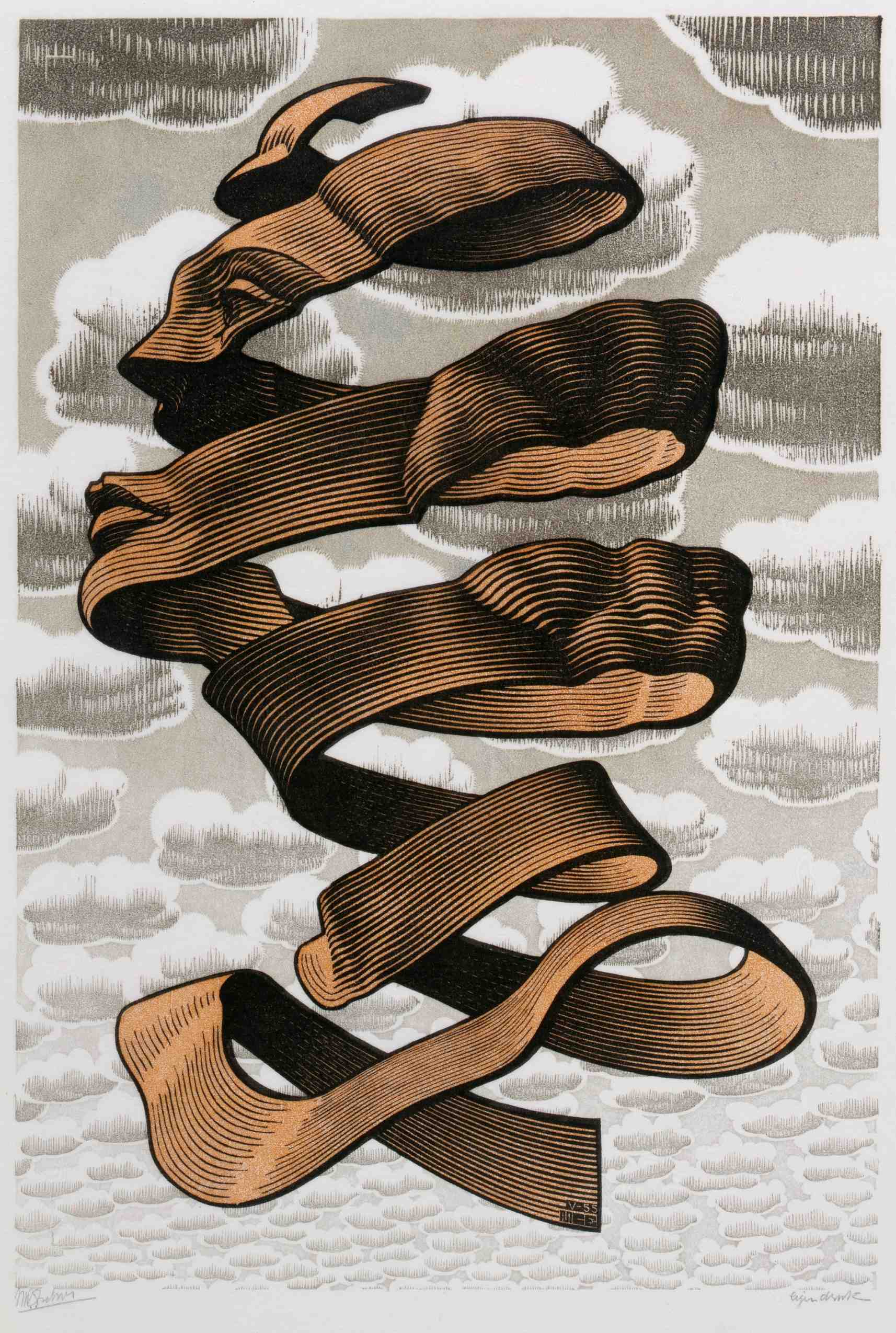
photo courtesy of Huffington Post, M C Escher, Salvador Dali
The continuation of this chapter describes a character’s very first signs of significant mental illness. In the novel overall, the character of Billie Rae is relatively minor; but the looming presence of her illness is pervasive, as it is in the lives of all who have significant illnesses, and all those who surround them and love them.
Billie felt like her sister was making her play a game she didn’t have no understanding of. She would get all excited when she knew Carol was coming, but always ended up feeling confused and sad and like she had done something wrong.
“When are you gonna come home?” Billie would say. “At least for a little longer?” At least.”
Carol would give a long sigh, partly like she was sad, but partly like she was mad, too. “I’m sorry, kiddo. You’re on your own here now. You’re just gonna have to do the best you can.”
Carol would sigh again, and look towards their mama’s bedroom door. “Tell her I said good-bye, OK?” Then she would get all soft and touch Billie ever so tender on her chin, or stroke at her hair a few more times. “You’re my beautiful baby sister, Billie Rae.” She barely made a sound as she went out the front door and closed it behind her.
Billie went over to the mirror, trying to figure if she was beautiful like Carol said. She turned her head this way and that, checking the fancy hairdo Carol had pinned up from all different angles. “How lovely you look today, my dear,” she said to her reflection, and burst into giggles. She ran to the bathroom and dug through a pile of things that had not been touched for many years, pawing and turning til she reached in and grabbed up an old tube of coral-colored lipstick that belonged to her mama. Filled up with boldness that come from her sister’s visit, Billie plucked the top off and peered at the waxy crayon of color deep inside. She held the tube up so close to her face while she slowly swiveled its bottom, that her eyes crossed. Billie balanced her hips on the edge of the bathroom sink so she could lean way in, her toes dangling in the air, and drew a precise outline of her mouth. Patting her lips together just like the movie stars she seen on TV shows, she batted her eyes at the reflection that looked back at her, and jumped down from the sink to stand back and admire her handiwork.
Billie pretended to take a couple of puffs from an imaginary cigarette, and in a fake English accent, said “Really, darling, that new hair…”
She stopped in her tracks. Right there in the middle of that sentence. “This is wrong, she thought. All wrong. I am all wrong.”
She stood there stock still, and a whisper of a word came out of her mouth: “no.”
Billie Rae unrolled a fistful of toilet paper and went to feverish work on her painted lips, wiping and scrubbing at them over and over. Not even thinking or caring about the walloping she might be getting later on, she tore the lid off her mama’s cold cream, thrust her fingers into the jar and slapped a heap of the goo all around her mouth, scouring at it with a fresh wad of toilet tissue. Looking back into the mirror, she let out a faint wail at what she saw.
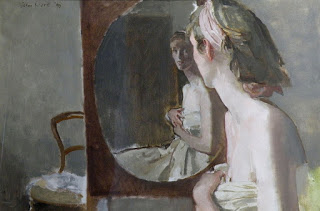
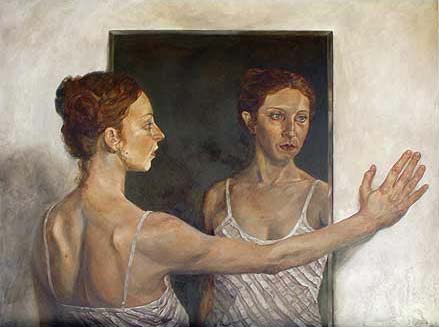
Paintings, top to bottom: John Ward, Alia E. El-Bermani, Pablo Picasso
I’d say that I’m not quite half way into my third novel, which tells the trials that unfold in extended family over the course of a few short months. It’s told from the perspective of the house itself, an idea I must credit to my friend Mary, who threw it out off-handedly over a glass of wine one night, and the idea stuck. The structure is modeled very loosely on Thornton Wilder’s play “Our Town.” In this case the house takes on the role of narrator in much the same way as the Stage Manager does in the play – sometimes existing within the events and possessing deep feeling for them, and other times standing outside of the action and providing perspective, or bringing in back stories.
How does my work differ from others in its genre?
Gosh, I guess I don’t really have any idea! My “genre” is literary fiction, I suppose, which falls way down on the list of what most people are writing these days. I have been told often that I am a “voice” writer, in that my writing centers on the distinct — and I hope strong and compelling — voice of the narrator. I do think I’m able to generate a narrative “drive” through the voice, which readers tell me compels the story forward. Plot becomes secondary to the voice, which can become a rather pesky, serious problem at times. Sometimes my narrator has a great deal to say about one thing or another, and loses sight of “story.”
Also, I started out writing poetry, and pursued this for many years initially (despite being Truly Bad). However, it remains a hallmark of my writing that I always endeavor to distill complex characters and situations into an absolute minimum number of words. I read every sentence over and over, and read each one aloud, for the first draft. I’ve been told this is highly irregular and ill-advised, but it’s what works for me.
Why do I write what I do?
I think most writers would answer this the same way, wouldn’t they? Because I have to. Writing is truly a solitary, gruelingly difficult, soul-wrenching way to pass the time. The reason I do it is because either an idea, or a character, or both, consumes me in a way that I simply must let that character have his/her due. At its best, I feel as if I am “channeling” a character – s/he has possessed me and their story pours out through my fingers. Doesn’t actually make the process of writing itself any easier, but at this point it feels necessary. That feeling helps counterbalance all of the other times that I feel like “What the heck am I doing? Where did I ever get the idea that I have anything whatsoever to say?” But, ah, those writing moments when I feel like I have nailed it – when I have managed to say precisely what I wanted to say – there is no greater feeling of having done something real and good here on Earth.
How does your writing process work?
Well, for one thing – slowly. It makes me miserable to hear about writers who crank out first drafts in a couple of months. It’s a laborious process to reach an economy of words!
I’ve experimented with plotting things out – in a weird past incarnation of myself I even had a box of index cards with character descriptions and scene ideas and plot developments. This method works for tons of writers, and god love them, I say. But it doesn’t work for me. I got very stuck on the ending of my second novel, and I swore I would not sit in front of a keyboard again with any thought of writing a novel-length work without having a fully-developed, carefully-constructed plot. But hey, the best laid plans and all that. I’m shooting from the hip once again, and I wouldn’t have it any other way.
**************
I didn’t even know what a “blog tour” was when writer (and indefatigable supporter of fellow authors) Michael Fedison asked if I would do this post, and thereby take part in the tour. Thanks to Mike for inviting me to join the fun. And now, it’s time for me to pass the baton to next Monday’s bloggers ! It is my pleasure to introduce authors Robert Villarreal, anjanapdeep (whose blog is “The Mental Picture), and Sarah Potter (SarahPotterWrites). Please watch for their posts on the 30th, and check out their work!
The blazing azalea bush was in full bloom, and my Lady was still being carried around inside when her mama and daddy bought their house. She knowed this from a photograph of the two of them standing in front of the azalea that spring, and another one of just her mama the very next spring holding a wild-haired infant of a few months when the bush broke out again.
And the boy was growing and kicking inside of my Lady while she and the Husband trudged around looking at place after place. They done their level best to look past the scraps of other people’s lives and to gaze ahead, trying to picture if the mortar and brick that stood around them could ever be a true home. It was early days for them, and the Husband could tell when his pregnant wife was working hard to recall the stoic spirit of her own mama, setting her chin against the desolation rising up behind her eyes. He reached for her hand, and he kissed it. “We’ll find it, baby. We will.”
She growed up thinking that this was the way the world was meant to be. You growed up and you found a worthy partner and you started a family and you made a home to raise them in. And you stayed. You weathered whatever came along, and you stayed. You kept right on staying until the moment of your very last breath on Earth, and you did it in the place where you’d lived.
He shook at her toe a few more times, then went over and sat down upon his own side of the bed. It occurred to him that maybe if he got back under the covers and shut his eyes for a time, then opened them up again, it might all be different.
Instead he picked up the phone. “Bob,” he said. “Bob, I think Mary’s dead. I’m not sure, but I think that maybe she is,” which was an especially sad and strange thing to say considering that he was a doctor, and he knowed right down into his bones that she had breathed her last.
Five years later, he was a shadow of his former self, which ain’t saying much. He spent most of that five years setting in one chair, at a table in his dining room. From that chair, he sorted through his piles of mail, and leafed through his magazines, and sipped at his bowls of lukewarm broth, and watched whatever happened to be on the television. He drank a goodly amount, and he smoked so much that the walls of the house – which had been painted a cheery eggshell white under Mary’s watch – looked for all the world like the entire major league had been spitting tobacco juice at them for the five years since she passed. He ate nothing but canned soup. Chicken noodle, or cream of mushroom, and he drank his whiskey straight, in big tumbler glasses they had gotten as a wedding present with his initials etched in a diamond pattern. The callous on his thumb was substantial from running it across the letter “M,” over and over, the one initial they had in common.
His hands shook bad, his lungs and liver was both shot to hell, he could hardly feel the ground underneath his own feet cause he no longer had the sense of them being attached to his legs. But worst of all for him, his eyesight was near gone, so he couldn’t see to read his beloved newspaper no more. He drank his full pot of coffee and smoked a great many cigarettes each morning while squinting at it, holding it close to one eye first, and then the other; but the news running on the television was giving him all the information he got, really.
My lady was setting there at that table with him, reading him from the newspaper about how them 1,000 miners way off in Poland was barricaded in the a mine in the Silesian coal district, cause they was the last folks still resisting martial law over there. A couple of the boys had been killed, like usual with such goings on, and my Lady was just getting to the details when her daddy placed his cigarette carefully in the ashtray, got a real surprised look on his face, and slid right on off of his chair and onto the floor. He, too, had died at home.